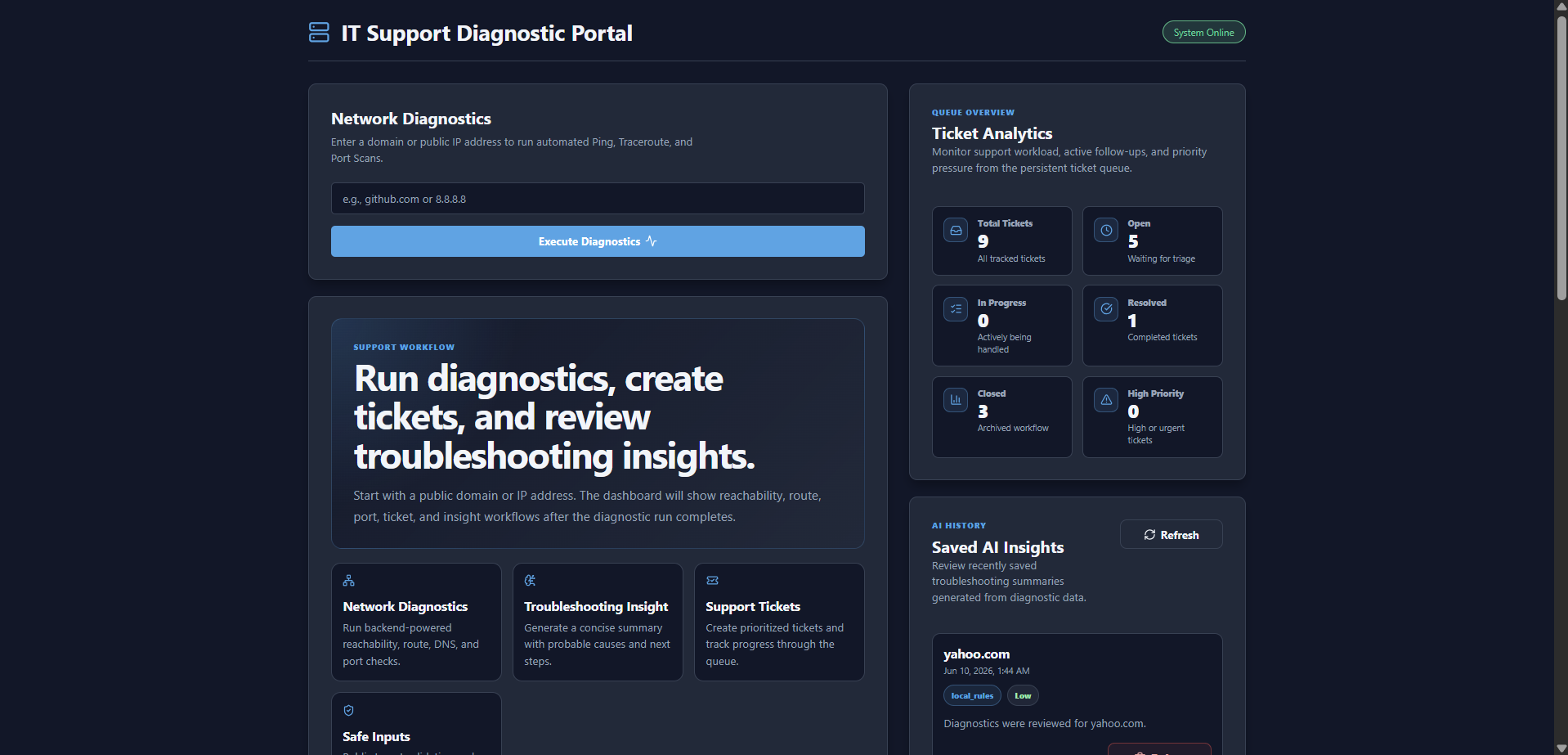
Support engineering · Secure full-stack systems

I troubleshoot systems, then build the fix.

I’m Akanksha Chavda. I work across IT support and software. While building these projects I ran into issues around DNS validation, billing events, Windows services, database readiness, and deployment. The projects below show how I traced those problems, what I changed, and how I checked the result.

3troubleshooting case studies
PRsfeature branch → PR → CI → merge
CItests, audits, and builds

Selected work

Selected work, with the evidence and limits made clear.

02
IT support engineering project PowerShell · Python · GitHub Actions

Enterprise IT Support Lab

A Windows troubleshooting project with endpoint checks, PowerShell remediation, and documented DNS, service-state, and disk-pressure cases.

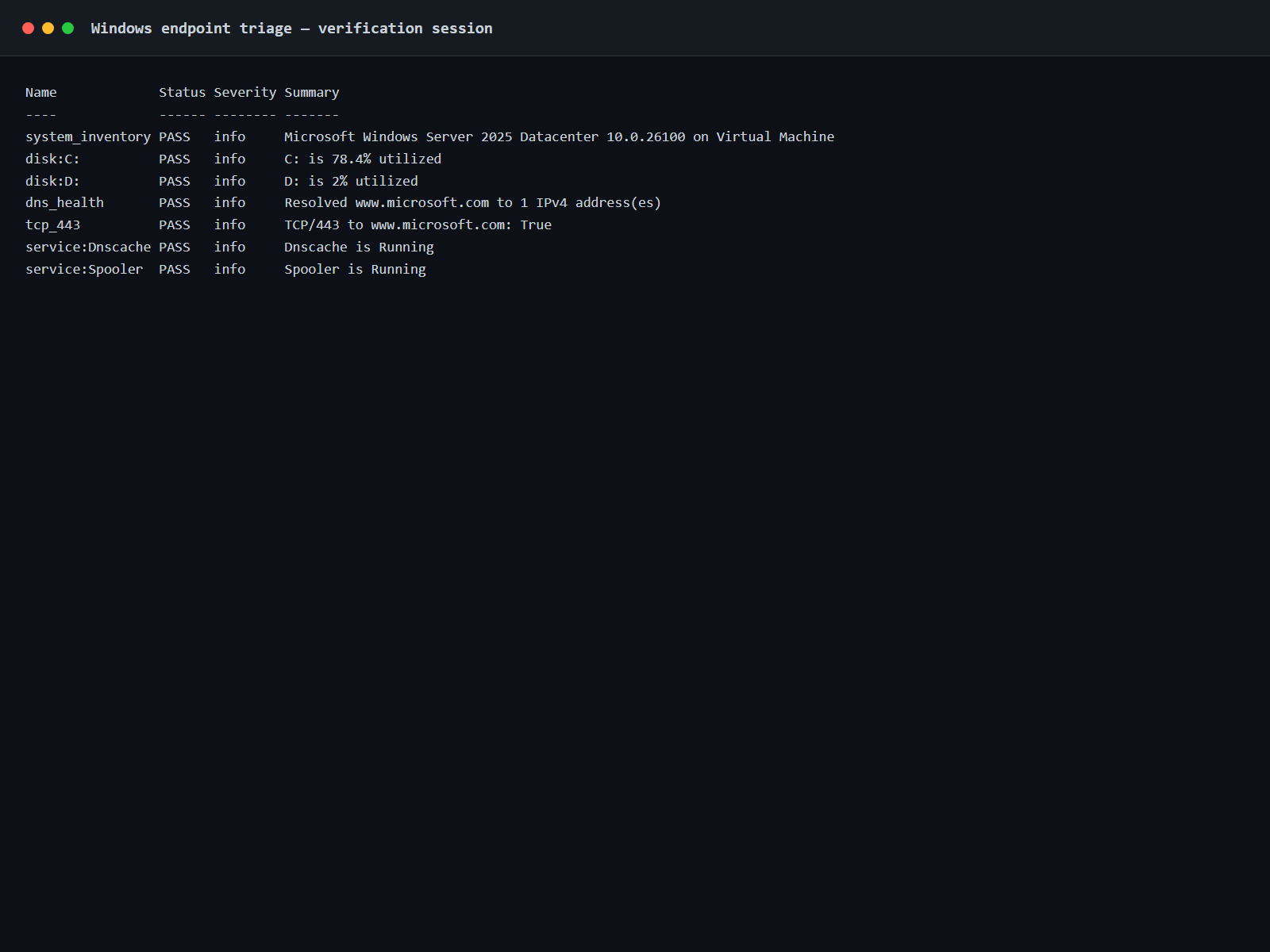
Windows endpoint triage output showing system, disk, DNS, TCP and service health checks

Problem

While extending the toolkit, I found that a healthy collector run was not enough to explain how I would handle DNS failure, a stopped service, or disk pressure.

Decision

I documented the three troubleshooting cases with competing hypotheses, before/after evidence, preview-first changes, retests, and escalation notes.

Verification

The WARN → PASS transitions are automated regression/case-harness results using the same collector logic. Separately, the Windows Server 2025 verification checks the live environment and records its own health output.

Limit: no customer or employer data is included, and the project does not claim production fleet ownership.

PowerShellWindowsPythonDNSTCP/IPEvent LogsGitHub Actions
03
Subscription application Next.js · TypeScript · PostgreSQL

SaaS Foundation

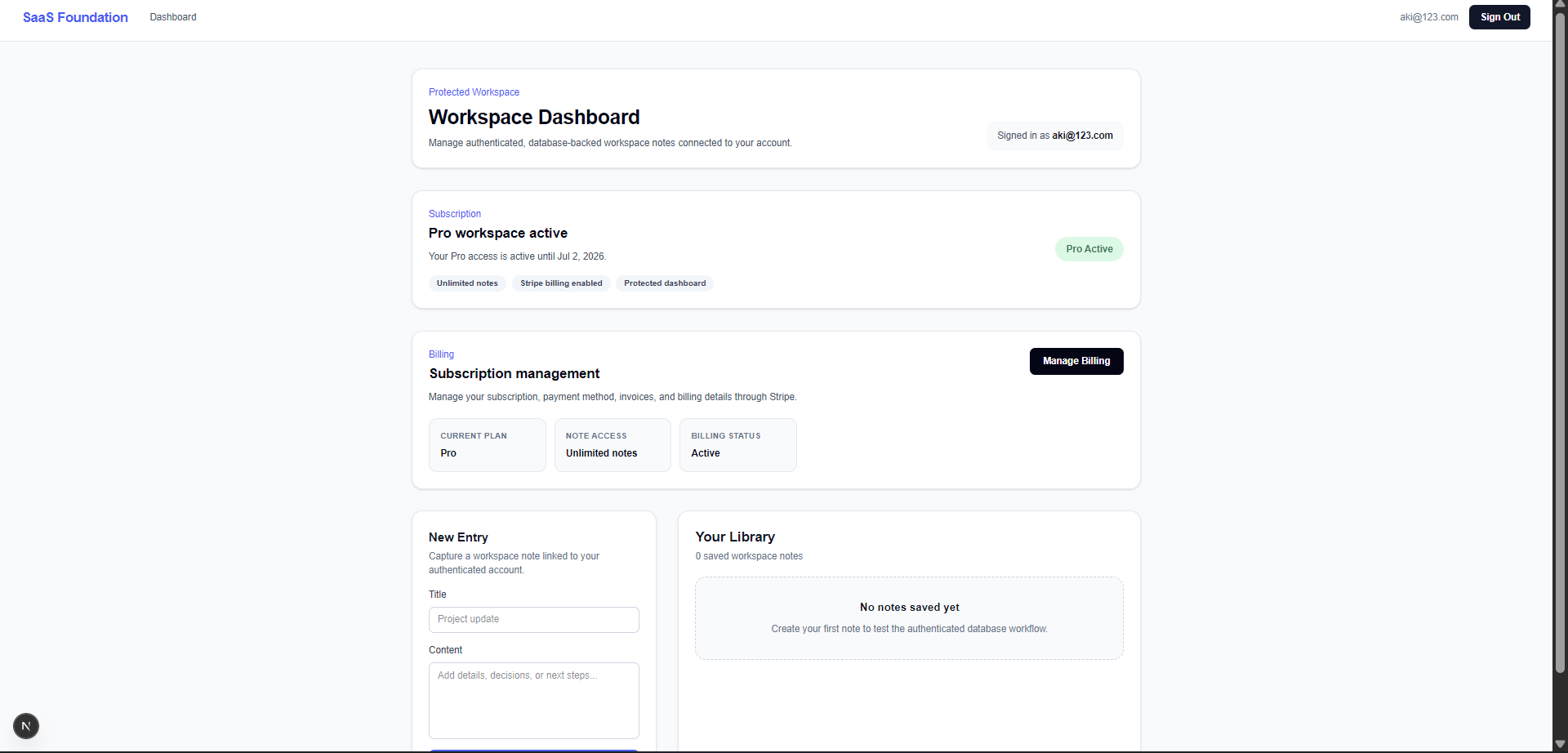
A Next.js subscription application with credentials auth, user-owned data, Stripe billing, rate limits, and a billing recovery path for duplicate or out-of-order webhook delivery.

SaaS Foundation authenticated Pro workspace and billing view

Problem

While working through the auth flow, I found that an existing passwordless account could gain a password without a verification step. Later, the Stripe webhook also needed duplicate-event and ordering protection.

Decision

Make credential transitions explicit, process Stripe events idempotently, reject stale or superseded subscription events, and add dry-run reconciliation before repair.

Verification

Auth and billing policy tests cover the failure cases; CI also runs dependency audit, lint, Prisma validation, tests, and a production build.

Limit: CI does not contain Stripe credentials, so policy tests are not described as end-to-end Stripe test-mode webhook delivery.

Next.jsTypeScriptPrismaNextAuthStripeAppSecVitest
04
Live product · early directory React · Vite · Cloudflare Workers · D1

VetPulse AI

A Gujarat-focused pet-care platform that brings public veterinary listings, pet profiles, local essentials and appointment requests into one place. It is designed to reduce the time pet owners spend searching across directories and messaging clinics.

Problem

Clinic details and appointment information are spread across search results, phone calls and WhatsApp. Owners may not know whether a clinic accepts walk-ins or has current availability.

Decision

Build a location-led directory with service and distance filters, direct contact links, pet profiles and appointment requests that remain pending until a clinic responds.

Current state

The live app is an early product build. It uses public listings and approximate location matching; clinic coverage is incomplete. Appointment requests do not confirm a visit unless a participating clinic accepts them.

Limit: clinics have not provided live queue or availability data, so VetPulse does not claim real-time wait times or crowding. Call clinics to confirm details before travelling. Online payments are not enabled.

ReactViteCloudflare WorkersD1 / SQLiteLocation UXProduct design
05
Launch mechanics prototype Next.js · TypeScript · Meteora DBC concepts

CurveClarity

A launch-design prototype for making token launch assumptions and buyer disclosures easier to inspect before a launch. Builders can compare illustrative curve profiles, adjust scenario inputs, review disclosure checks, and export a draft brief.

Problem

Launch mechanics, fee assumptions, liquidity destinations, and token unlock details can be difficult to understand when they are scattered across separate tools and documents.

Decision

Put curve previews, editable assumptions, graduated liquidity allocation, and plain-language allocation and unlock disclosures into one review flow.

Current state

The source includes three illustrative curve profiles, responsive controls, disclosure readiness checks, and a JSON launch brief export. Values are labeled as assumptions.

Prototype limit: curve previews are presentation-only; no Meteora SDK quote simulation, wallet connection, on-chain transaction, or live demo is included yet. Verify all settings with the official DBC SDK before deployment.

Next.jsTypeScriptReactProduct DesignDisclosure UX

How I work

What I can explain in an interview.

01

Customer & case support

Phone and email communication, issue ownership, clear updates, accurate records, escalation, and reliable follow-through.

02

Technical troubleshooting

Windows, Linux, TCP/IP, DNS, DHCP, Wi-Fi, VPN, reachability, route analysis, ports, logs, and structured diagnosis.

03

Software delivery

React, JavaScript, TypeScript, Python, FastAPI, SQL, REST APIs, Git, automated tests, and continuous integration.

04

Security & reliability

SSRF boundaries, credential transitions, webhook idempotency, dependency audits, readiness checks, request correlation, regression tests, and recovery runbooks.

05

Remote operations

Scheduling, documentation, data handling, vendor coordination, case ownership, and clear asynchronous communication.

Available for support and technical opportunities

Let’s solve the next problem.

For IT support, support engineering, full-stack development, application security, or technical operations roles, reach me directly.